Our lab has a longstanding interest in conducting quantitative syntheses to address consequential questions on a variety of topics in conservation biology. Commonly, these syntheses have been developed from interests in applying genetic and evolutionary principles to conservation. In addition, they often extend research questions our lab members are empirically addressing on single species or specific population systems. Below are quantitative syntheses that we have conducted. Graduate students and postdocs who are interested in conducting quantitative syntheses for conservation are encouraged to contact Dylan Fraser.
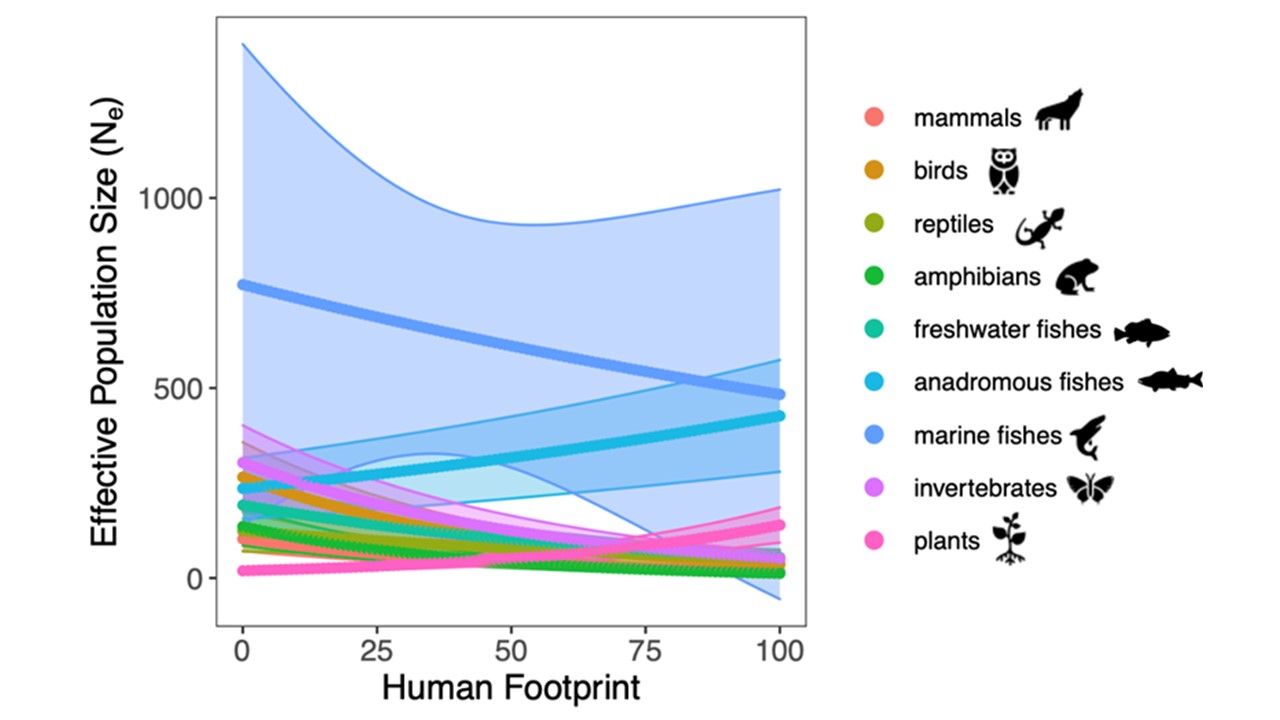 Global assessment of effective population sizes across taxa reveals major challenges in meeting 50/500 criteria (submitted 2023)
 Macrogenetics reveals multi-faceted environmental influences on vertebrate population genetic diversity across the Americas (Molecular Ecology, 2023)
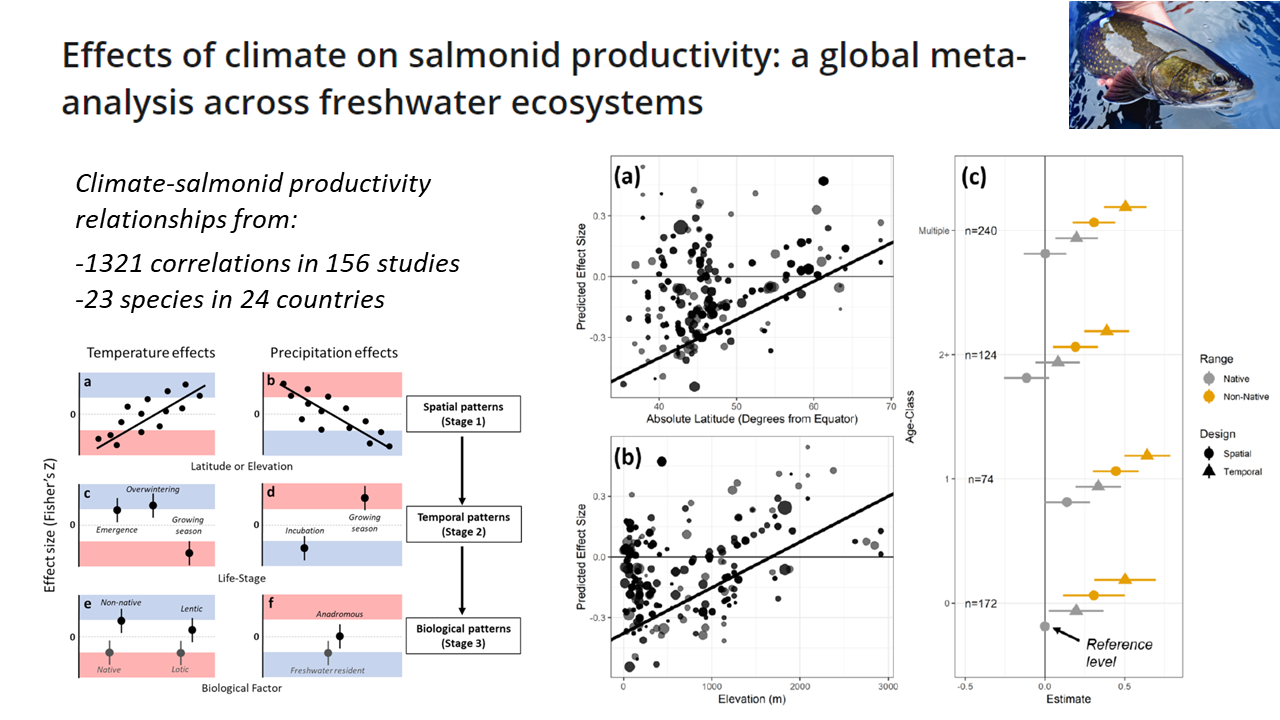 Effects of climate on salmonid productivity: a global meta-analysis of freshwater ecosystems (Global Change Biology, 2022)
 Assessing biodiversity hotspots below the species level in Canada using designatable units (Global Ecology and Conservation, 2021)
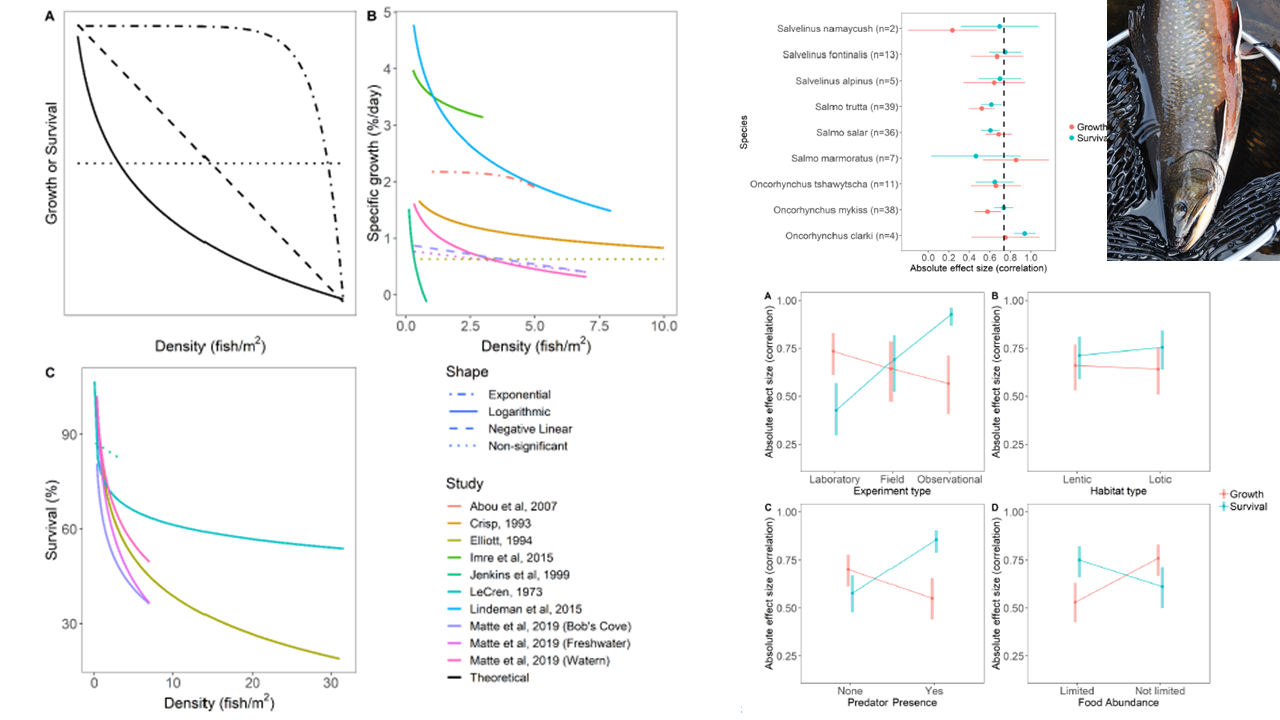 Density-dependent growth and survival in salmonids: quantifying biological mechanisms and methodological biases (Fish and Fisheries, 2020)
 Latitudinal biodiversity gradients at three levels: linking species richness, population richness and genetic diversity (Global Ecology and Biogeography, 2020)
 Meta-analysis supports further refinement of eDNA for monitoring aquatic species-specific abundance in nature (Environmental DNA, 2019)
 Are selection and heritability related to population size in nature? Meta-analysis and conservation implications (Evolutionary Applications, 2016)
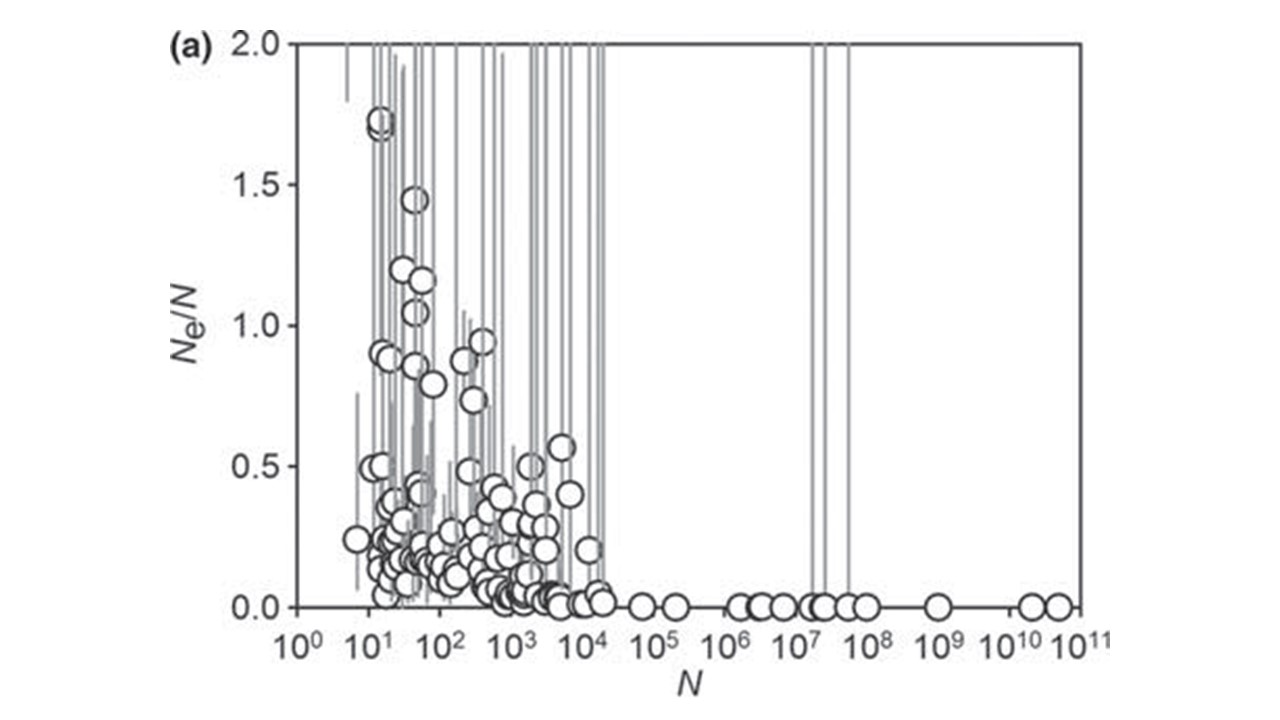 Effective/census population size ratio estimation: a compendium and appraisal (Ecology and Evolution, 2012)

Extent and scale of local adaptation in salmonid fishes: review and meta-analysis (Heredity, 2011)